
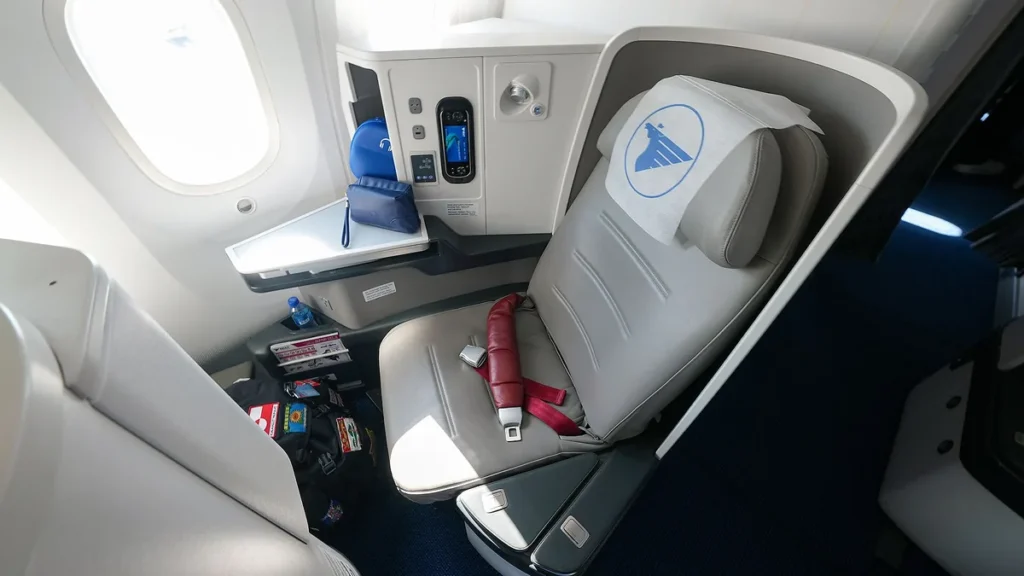
If you want to book cheap business class flights from the UK, the secret is flexibility. Fares for the same seat can vary hugely depending on when you fly, which route you take and how you book.
This guide explains why business class prices change so much, then sets out 11 practical ways to pay less, from flexible dates and one-stop routes to points, upgrades and premium economy. It also explains how Air Passenger Duty adds to the cost of premium cabins, with example routes to Dubai, the Maldives and Bali.
For route ideas and flight options, browse our flights pages.
At a glance: six tactics that save the most
- Be flexible: moving your dates by a few days can change the fare a lot.
- Avoid peak weeks: school holidays, Christmas and Easter push premium fares up.
- Consider one stop: connecting through a Gulf or European hub often costs less than flying direct.
- Watch for sales: airlines run regular premium-cabin sales.
- Use points wisely: reward seats and upgrades can be excellent value, but taxes and charges still apply.
- Compare premium economy: it can give you much of the comfort for less.
Why business class prices vary so much
Business class prices vary because airlines sell each cabin in several fare levels, and the cheapest levels sell out first. Demand, route, competition and the time of year all change which fares are available on a given day.
Each flight has a limited number of seats at each price. When demand is high, such as in school holidays or around big events, the lower fare levels disappear quickly and only the most expensive ones remain.
Competition matters too. Routes served by several airlines, or with good one-stop alternatives, often have lower business class fares than routes where one airline has most of the direct flights.
When is business class cheapest?
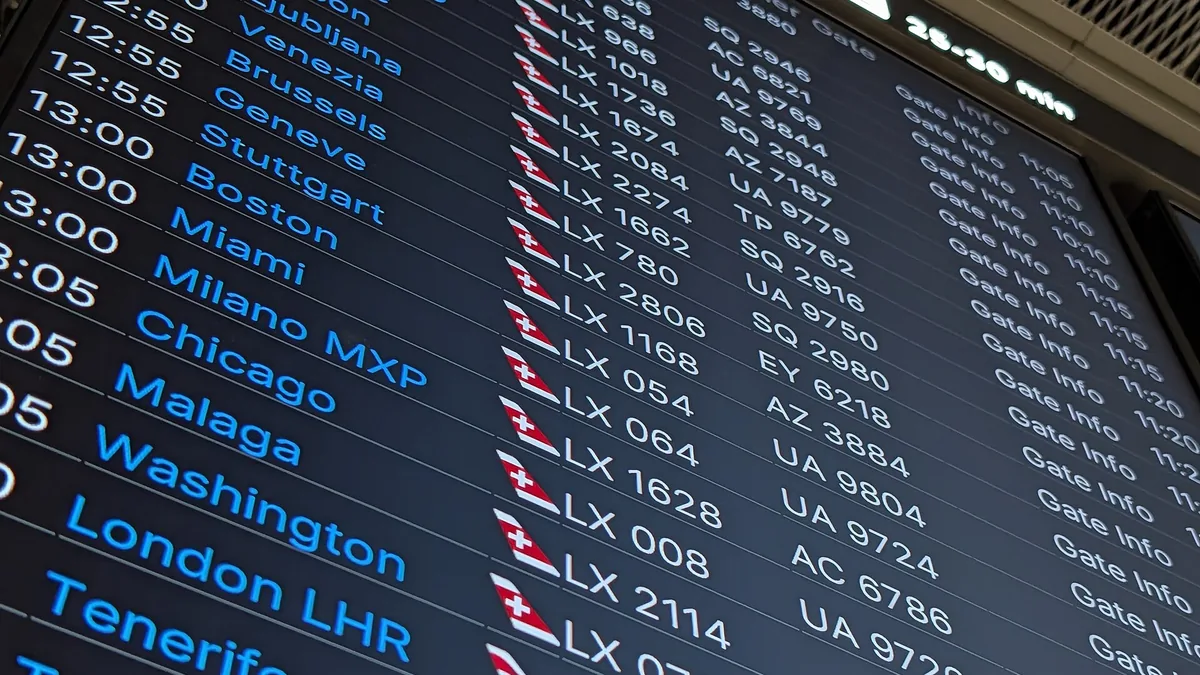
Business class is often cheapest outside the busiest leisure periods, and on days when fewer people want to travel. Mid-week departures and returns are often better value than Fridays and Sundays.
Booking early also helps, because the cheaper fare levels are more likely to be available. Last-minute fares are occasionally reduced, but on popular holiday routes they usually go up, not down.
11 ways to book cheap business class
The best way to book cheap business class is to combine several small savings: flexible dates, a quieter season, a sensible route and the right way of paying. Here are 11 tactics, starting with the easiest.
1. Be flexible with your dates
Moving your departure or return by a day or two can make a big difference to the price. Use a flexible-date or calendar search to compare fares across a whole week or month.
Mid-week flights are often cheaper than weekends, and returning on a Tuesday or Wednesday can be better value than a Sunday.
2. Travel in the shoulder seasons
Premium cabins are in high demand during school holidays, Christmas, New Year and Easter. If you can travel just before or after these periods, you will usually find more choice and lower fares.
The shoulder seasons also tend to bring good weather at many destinations, such as May, June, September and October in Europe.
3. Consider one-stop routes
Connecting through a hub such as Dubai, Doha, Abu Dhabi, Istanbul or a major European city is often cheaper than flying direct. Airlines that connect passengers through their home airport compete hard on price for long-haul routes.
A connection adds time, but it can also break up a long journey. On some routes, you can even add a short stopover at no extra flight cost.

4. Compare regional airports
Fares from Manchester, Birmingham, Edinburgh, Glasgow and other regional airports can be different from London’s. Sometimes a regional departure with a connection is cheaper than flying direct from Heathrow or Gatwick.
Remember to include the cost and time of getting to the airport when you compare fares.
5. Watch for airline sales
Many airlines run sales on premium cabins several times a year, often with travel dates months ahead. Sign up to airline newsletters and set fare alerts on your preferred routes, so you hear about sales early.
Sale fares can have stricter rules, so check the change and cancellation terms before you book.
6. Use points and miles
Frequent flyer schemes, such as Avios and Virgin Points, let you book reward seats or upgrades with points. On long-haul routes, using points for business class can be excellent value compared with the cash fare.
However, taxes, fees and carrier charges still apply, and they can be significant on some airlines and routes. Reward seats are limited, so book as early as you can, especially for school holidays.
Points tip
Compare the cash fare with the points price plus taxes and charges. Points are usually best value on long-haul business class, rather than short flights or economy seats.
7. Look at upgrades and bids
Some airlines let you upgrade with points or cash after booking, or bid for an upgrade before you fly. If there are empty seats in business class, your offer may be accepted, sometimes for much less than a business class fare.
Upgrades are never guaranteed, so only rely on them if you are happy to fly in your original cabin. A paid upgrade also counts as travelling in the higher class for Air Passenger Duty.
8. Mix your cabins
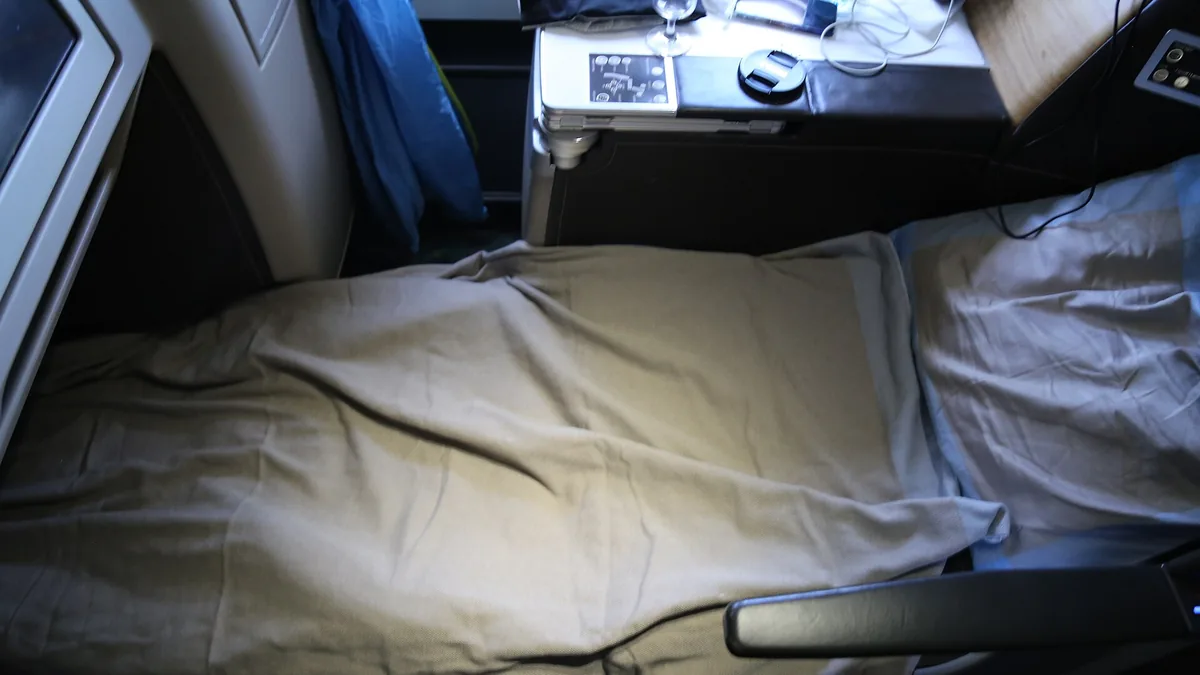
On a journey with a connection, you may be able to fly business class on the long overnight leg and economy on the short one. This can cut the fare while still giving you a lie-flat bed when it matters most.
Ask for a mixed-cabin fare when you search, or ask a travel agent to price one for you.
9. Is premium economy worth it instead?
Premium economy can be a great alternative if business class is out of reach. You usually get a wider seat, more legroom, better food and a larger baggage allowance, for much less than business class.
It does not usually include a lie-flat bed, so on long overnight flights business class may still be worth it. On daytime flights, premium economy is often the best value.
10. Book a package holiday
Booking flights and hotels together can sometimes make premium cabins more affordable. Tour operators and travel agents may have access to fares that are only sold as part of a holiday.
Packages can also make a long-haul trip simpler, with transfers and hotels arranged in one booking.
11. Ask an agent to search fares
A good travel agent can compare airlines, routes and cabin combinations that are hard to find on your own. Use our flight search to explore options, or ask us to compare fares for your dates.
An agent can also help with mixed cabins, stopovers and multi-city routes, which many search sites struggle to price.
Which tactics save the most?
If you only have time for a few things when you book cheap business class, start with the easy wins. The list below groups the tactics by the effort they take.
- Easy, often big savings: flexible dates, travelling in the shoulder seasons and comparing one-stop routes with direct flights.
- Some effort: watching for sales, comparing regional airports, pricing mixed cabins and looking at package holidays.
- Most effort, highest potential value: collecting and using points, and timing upgrade offers or bids.
Premium economy sits outside this list, because it is a different product rather than a cheaper route to the same seat. It is still worth pricing alongside business class, so you can see what the extra comfort really costs.
Air Passenger Duty and premium cabins
Air Passenger Duty (APD) is a UK tax charged on each passenger departing from a UK airport. Business class and premium economy pay a much higher standard rate than economy, which adds to the cost of a premium ticket.
APD depends on your final destination band and your class of travel. The reduced rate applies to the lowest class, with a seat pitch under 40 inches. The standard rate applies to any other class, including premium economy, business and first.
| Destination band | Economy (reduced rate) | Business/premium (standard rate) | Example destinations |
|---|---|---|---|
| Band A: up to 2,000 miles | £15 | £32 | Europe, including Greece |
| Band B: 2,001 to 5,500 miles | £102 | £244 | Dubai, the Maldives |
| Band C: over 5,500 miles | £106 | £253 | Bali (Indonesia) |
From 1 April 2027, the rates are due to rise again. Band A will be £15.49 reduced and £33.04 standard, Band B £105.33 and £251.95, and Band C £109.46 and £261.25.
There is no APD on direct long-haul flights departing Northern Ireland. For full details, see the GOV.UK guide to Air Passenger Duty rates and allowances.
Example routes from the UK
Whether direct or one-stop flights are better value depends on the route. For short long-haul flights such as Dubai, direct is usually best, while for the Maldives and Bali a connection can offer more choice and better prices.
| Route | Direct options | One-stop options | Trade-off |
|---|---|---|---|
| London to Dubai | Several direct flights daily, around 7 hours | Via European hubs or Istanbul | Direct is quick and competitive, so one stop rarely saves enough |
| London to Malé | Around 10 hours where a direct service operates, often seasonal | Via the Gulf, Istanbul or Colombo | One stop gives more choice of business class seats and can cost less |
| London to Bali | No direct flights | Via Singapore, Doha, Dubai, Kuala Lumpur or Bangkok | Choose a lie-flat seat on the long leg; total journey around 17 hours or more |
For Dubai, direct flights are short enough that a flat bed is a luxury rather than a necessity on daytime flights. See our page on flights from London to Dubai for options.
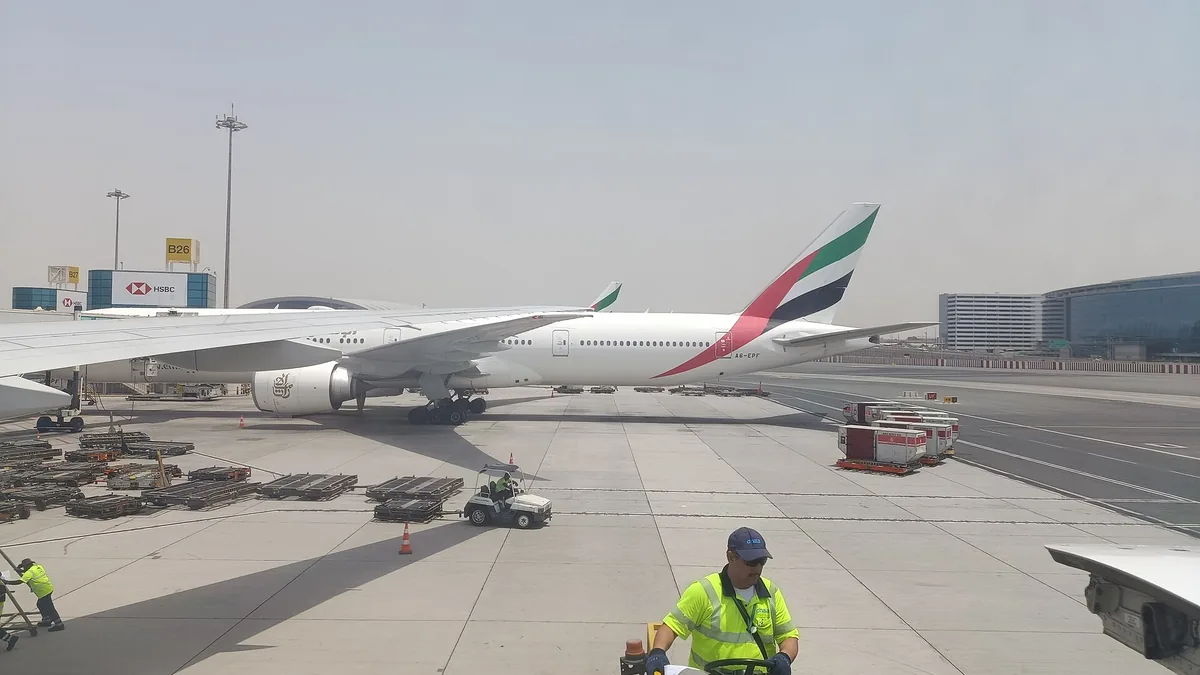
For the Maldives, connecting through the Gulf opens up a wide choice of business class cabins, and a stopover in Dubai or Doha can break up the trip. Compare options on our flights from London to Malé page.
For Bali, every route from the UK needs a connection, so focus on the comfort of the longest leg. A mixed-cabin fare can make sense here, with business class on the long overnight flight.
Mistakes that cost money
The cheapest business class fare is not always the best deal. Some of the biggest costs come from fare rules, missed connections and breaking airline conditions.
- Ignoring fare rules: cheaper fares may be non-refundable or charge high fees for changes. Read the rules before you pay.
- Booking separate tickets with tight connections: if your first flight is late, the second airline may not rebook you for free.
- Skipping flights on your ticket: most airlines cancel the rest of your journey if you miss a flight, and deliberately skipping segments breaks many airlines’ conditions of carriage.
- Not checking the seat: on many short European flights, business class is an economy seat with the middle seat kept free, not a lie-flat bed.
- Forgetting extras: compare the full price, including taxes, charges, seat selection and any baggage fees.
- Booking with a company you do not know: if a fare looks too good to be true, check who you are paying and how to contact them if something goes wrong.
Read the fare conditions
Before you book cheap business class fares, check the change, cancellation and refund rules. A low fare with strict conditions can end up costing more than a flexible one if your plans change.
It is also worth arranging travel insurance as soon as you book, so you are covered if you have to cancel for a reason your policy includes.
Our verdict
You can book cheap business class flights from the UK by being flexible, avoiding peak weeks and comparing one-stop routes with direct flights. Points, upgrades, mixed cabins and premium economy can all help too, as long as you check the rules and the full price, including Air Passenger Duty.
If you would like help, ask us to search fares for your dates. SkyWays Hub can compare airlines, routes and cabins, and add hotels and transfers if you want a complete trip.
Let us compare business class fares for you
Tell us your dates, departure airport and destination. We will compare cabins, routes and stopovers to find options that suit your budget.
Frequently asked questions
What is the cheapest way to fly business class?
The cheapest way is usually a combination of tactics: flexible dates, travelling outside peak holidays, comparing one-stop routes with direct flights and watching for airline sales. Points and upgrades can also be excellent value. Always compare the full price, including taxes, charges and fare rules, not just the headline fare.
When is the best time to book business class?
Booking early usually gives you the best choice of fares, especially for school holidays, Christmas and Easter. Watch for airline sales, which often offer premium cabins for travel months ahead. Last-minute deals do happen, but on popular holiday routes business class fares usually rise as the departure date gets closer.
Is it cheaper to fly business class with a stopover?
Often, yes. Airlines that connect passengers through hubs such as Dubai, Doha, Abu Dhabi or Istanbul compete hard on long-haul routes, so a one-stop business class fare can cost less than a direct one. A connection adds time, but some routes let you add a short stopover to break up the journey.
Can you upgrade to business class cheaply?
Sometimes. Some airlines offer paid upgrades after booking, upgrade bids before departure or upgrades using points. If business class has empty seats, these can cost much less than a full business class fare. Upgrades are never guaranteed, and a paid upgrade counts as travelling in the higher class for Air Passenger Duty.
How much Air Passenger Duty is there on business class?
From 1 April 2026, business class pays the standard rate: £32 for Band A destinations, £244 for Band B and £253 for Band C, per passenger departing the UK. These rise slightly from 1 April 2027. There is no APD on direct long-haul flights departing Northern Ireland.
Is premium economy worth it?
Premium economy is often worth it on long daytime flights, giving you a wider seat, more legroom, better food and more baggage for much less than business class. On long overnight flights, a lie-flat business class seat may be worth the extra. Compare both cabins for your route and dates.
Are business class sales real?
Yes. Airlines regularly run genuine sales on premium cabins, often for travel several months ahead. Sale fares can have stricter conditions, such as limited changes or no refunds, so read the rules before you book. Fare alerts and airline newsletters help you hear about sales early.
Should I book business class through a travel agent?
A travel agent can be useful for business class, especially for complex trips, mixed cabins, stopovers or holidays with hotels and transfers. Agents can compare airlines and routes for you and may have access to fares sold only with holidays. For a simple return flight, compare the agent’s quote with booking direct.
Sources
- GOV.UK: Rates and allowances for Air Passenger Duty (updated 1 April 2026; checked October 2026)