
The best time to visit the Maldives is from December to April, when the dry north-east monsoon brings the most sunshine, calm seas and the lowest rainfall of the year. April and November are good-value shoulder months, while May to November is wetter but still warm, quieter and usually cheaper.
This guide explains the two Maldives seasons month by month, using long-term climate averages for Malé. It also shows which months suit honeymooners, families, divers and anyone travelling on a budget from the UK.
At a glance
- Best overall: January to March, the driest and sunniest months.
- Best value: April and November, either side of the peak season.
- Best for manta rays: roughly June to November in Baa Atoll.
- Best for families: February half-term and Easter, but book early.
- Think twice: May and October, the wettest months on average.
The two Maldives seasons explained
The Maldives has two seasons, not four. The dry north-east monsoon, called Iruvai, runs roughly from December to April. The wetter south-west monsoon, called Hulhangu, runs roughly from May to November.
What surprises many first-time visitors is how little the temperature changes. Average daytime highs in Malé stay between about 30 °C and 32 °C all year, and nights rarely fall below 25 °C. The sea is warm in every month, so swimming and snorkelling are always possible.
The real difference is rain, cloud and wind. In the dry season you can expect long sunny days, clear skies and flat, glassy lagoons. In the wet season the islands see more showers, more cloud and stronger winds, which can make the sea choppy for boat trips.
Dry season: December to April
From December to April, the north-east monsoon brings dry air across the Indian Ocean. February is the driest month, with under 40 mm of rain on average, and March is the sunniest, with close to 290 hours of sunshine. Visibility underwater is often excellent, which is why this is also a favourite time for divers.
Wet season: May to November
From May, the south-west monsoon arrives with humid air and heavier rain. May and October are the wettest months, each averaging around 240 mm of rain in Malé. Even so, the wet season still brings plenty of sunshine, often more than 200 hours a month.
If you are still deciding which part of the country to stay in, our Maldives destination guide gives a quick overview of the atolls and island types.
Maldives weather by month
The table below shows average conditions for every month of the year, based on 1991 to 2020 climate averages for Malé. When you weigh up the best time to visit the Maldives, compare rain and sunshine rather than temperature, which barely moves.
| Month | Average high (°C) | Rainfall (mm) | Rainy days | Sunshine (hours) |
|---|---|---|---|---|
| January | 30.6 | 86.8 | 5.5 | 258 |
| February | 31.0 | 37.9 | 3.2 | 264 |
| March | 31.6 | 48.6 | 4.5 | 288 |
| April | 31.9 | 127.2 | 8.5 | 260 |
| May | 31.5 | 238.2 | 15.0 | 223 |
| June | 31.1 | 146.1 | 12.9 | 211 |
| July | 30.8 | 198.1 | 13.7 | 212 |
| August | 30.7 | 193.2 | 13.0 | 229 |
| September | 30.5 | 213.7 | 15.3 | 208 |
| October | 30.5 | 245.4 | 15.2 | 230 |
| November | 30.4 | 235.6 | 14.2 | 204 |
| December | 30.4 | 212.2 | 12.0 | 215 |
January to March: peak dry season
These are the three most reliable months for blue skies. Rainfall is low, rainy days are few and the seas are usually calm, which makes seaplane and speedboat transfers smoother. Demand is high, so the best villas sell out early.
April: the sweet spot
April is the warmest month on average and still very sunny, with about 260 hours of sunshine. Rain starts to build towards the end of the month as the monsoon changes. For many couples, early April offers dry-season weather with a little less demand.
May to August: the start of the wet season
May brings the first heavy rains, with around 15 rainy days on average. June is usually calmer, and July and August often see long sunny spells between showers. These months suit travellers who value space and better deals over guaranteed sunshine.
September to December: transition back to dry
September and October are wet, but November starts the change back towards drier weather. By late December the north-east monsoon is usually established, just in time for the festive season.
Best time to visit the Maldives for different trips
The best time to visit the Maldives depends on what you want from the trip. Couples chasing sunsets, families tied to school holidays and divers hoping to see manta rays will each choose different months.
Honeymooners
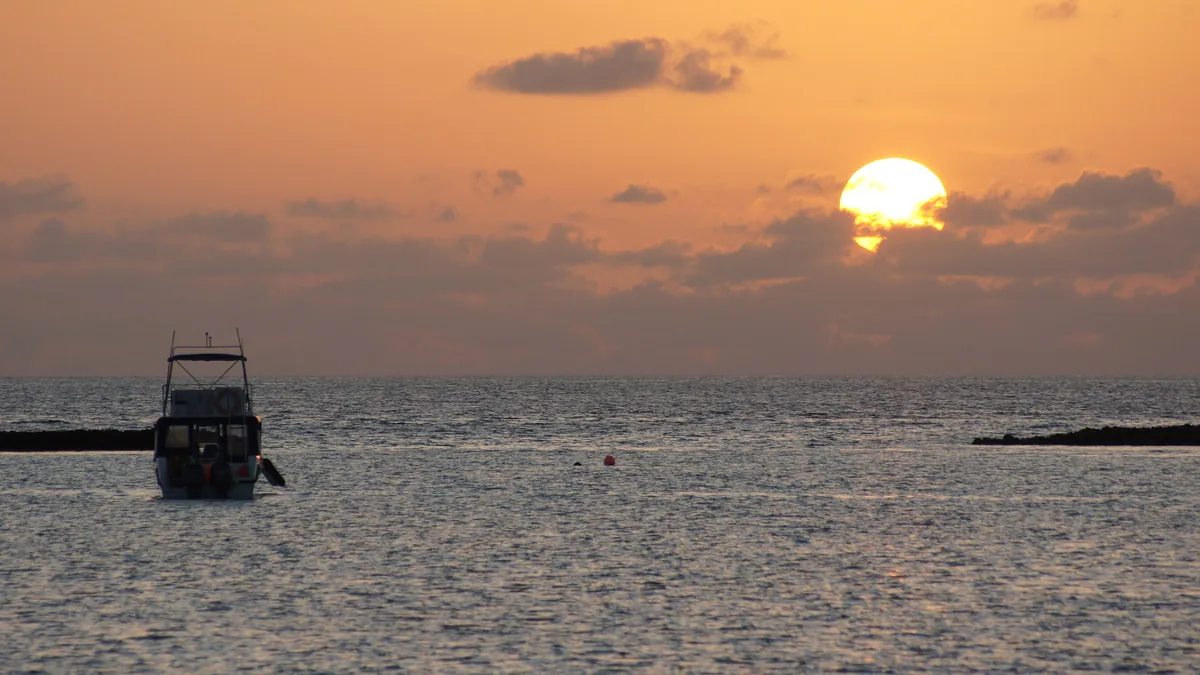
For a honeymoon, January to April gives you the best chance of clear sunsets, calm lagoons and dry evenings on the deck of your villa. If your wedding is in the summer, July and August can still be lovely, with lower demand and quieter resorts. Our Maldives honeymoon guide explains how to choose a resort and villa for your dates.
Families and UK school holidays
Many UK families travel at February half-term and Easter, which both fall in the dry season. These weeks are popular, so book well ahead and check that your resort has a kids’ club and a sheltered lagoon. The UK summer holidays fall in the wet season, but showers often pass quickly and resorts are less busy.
Divers and snorkellers
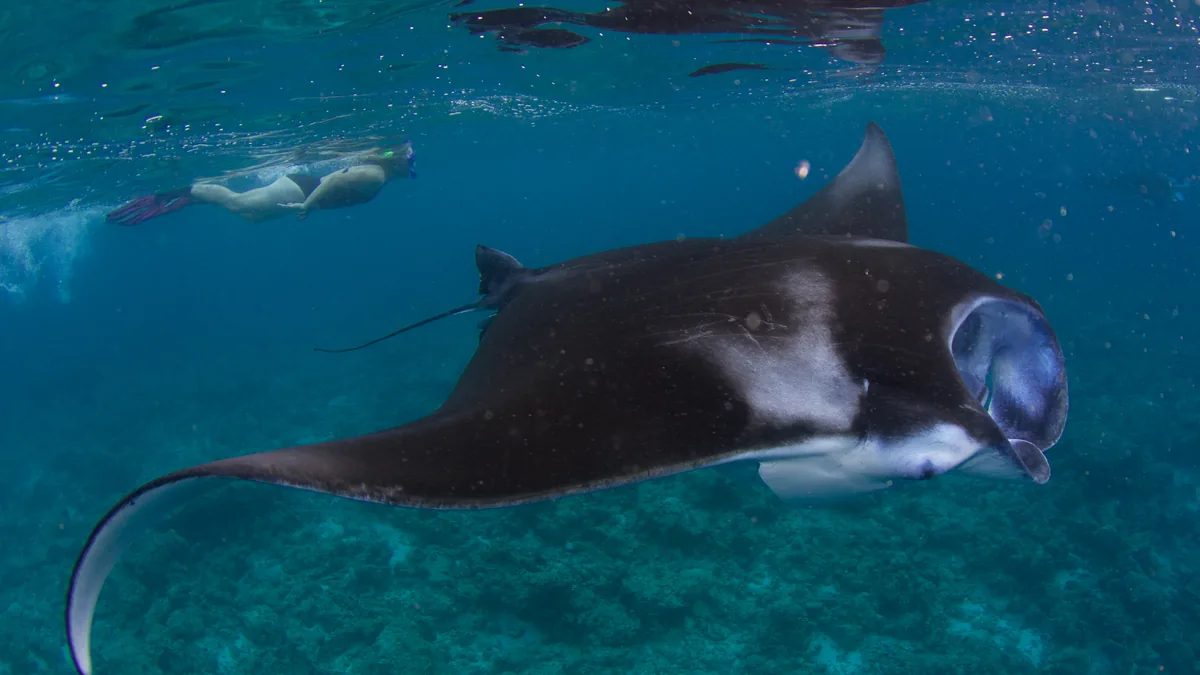
Divers often prefer the dry season for its clear water and calm conditions. However, the wet season has its own highlight: manta rays gather in Hanifaru Bay, in Baa Atoll, mainly from about June to November. Baa Atoll is a UNESCO Biosphere Reserve, and resorts nearby run trips when the mantas are feeding.
Whale sharks can be seen year-round in South Ari Atoll. Sightings are never guaranteed, but a resort or day trip in that area gives you the best chance.
Travellers on a budget
May to October is usually the cheapest time to go, outside the UK summer holidays. Rooms that are hard to find in February are often easier to book, and resorts may add extras such as a free night or a meal-plan upgrade. Bring a light rain jacket and plan your snorkelling for the sunny spells.
Surfers
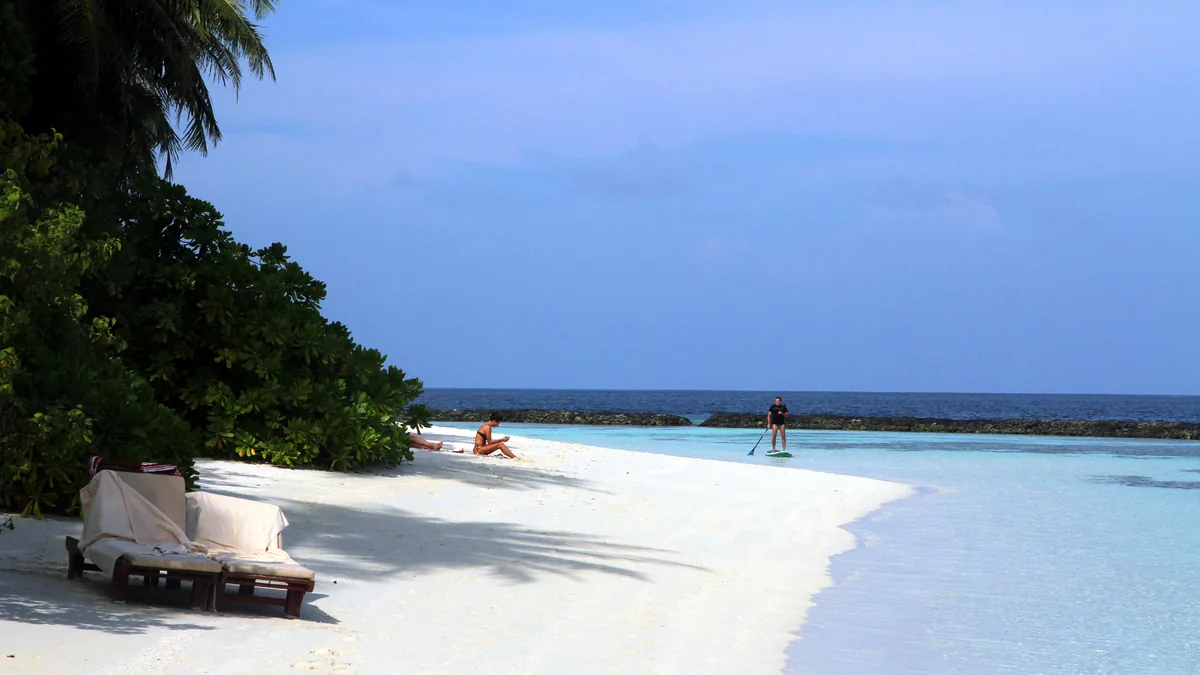
The south-west monsoon brings bigger swells, so experienced surfers often head out between May and October. If you want calm, glassy water for paddleboarding or a first snorkel, the dry season is the better choice.
Is the wet season really a washout?
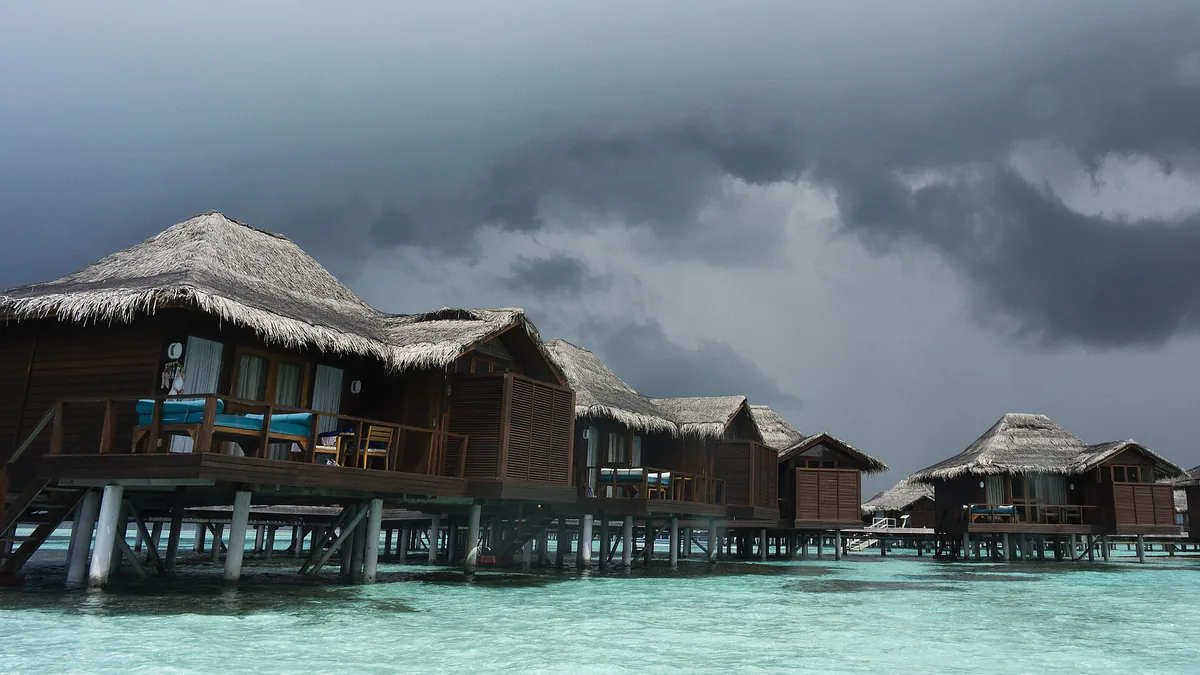
Usually not. Wet-season rain in the Maldives often falls in short, heavy bursts, followed by sunshine, rather than as all-day drizzle. Even the wettest months average around 200 or more hours of sunshine.
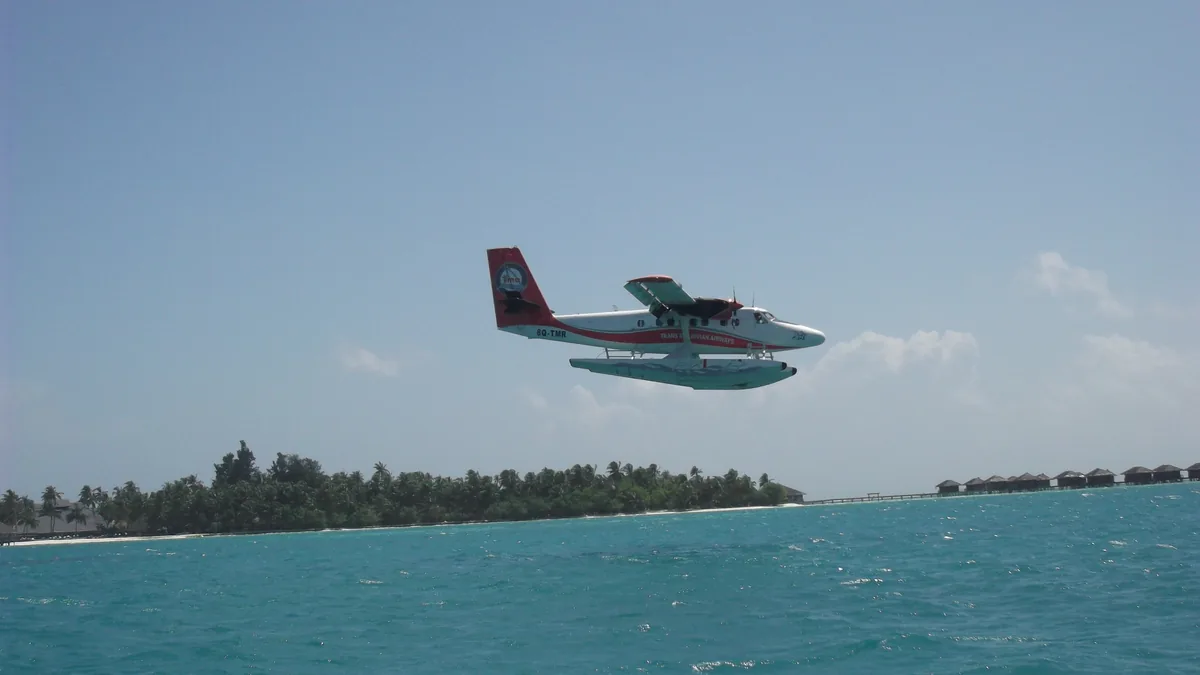
That said, the wet season does bring more cloud, stronger winds and the occasional stormy day. Rough weather can delay boat trips, and seaplanes only fly in daylight and in suitable conditions, so a late international arrival may mean a night near Malé.
Tip for wet-season trips
Choose a resort with indoor dining, a spa and a good house reef close to your villa. That way a shower is a pause, not a lost day, and you can snorkel as soon as the sun returns.
Prices and crowds through the year
The busiest and most expensive weeks are Christmas and New Year, followed by February half-term and Easter. The quietest and cheapest months are usually May, June, September and October.
Prices in the Maldives depend on demand as much as weather, because each resort has a limited number of villas on its own island. When demand is high, the best overwater villas go first, and minimum-stay rules are common. If you compare all-inclusive Maldives holidays with half board, check whether the meal plan changes the value in your chosen month.
| Period | Weather | Crowds and prices | Good for |
|---|---|---|---|
| Christmas and New Year | Mostly dry, settling in | Highest demand of the year | Festive breaks, booked early |
| January to March | Driest and sunniest | High, especially at half-term | Honeymoons, first visits |
| April | Hot and sunny, rain building late | Busy at Easter, easing after | Couples, good-value dry days |
| May to June | Wet season begins | Quieter, better deals | Budget trips, spa breaks |
| July to August | Mixed sun and showers | Busier with UK families | Summer holidays, mantas |
| September to November | Wet, turning drier late | Quiet, good value | Mantas, last-minute escapes |
How far ahead to book
For Christmas, February half-term and Easter, many couples and families book six to twelve months ahead to secure the villa type they want. For the wet-season months, shorter notice is often fine, and you may find more choice of resorts.
Whichever month you choose, check the transfer type before you book. A long seaplane or domestic flight plus boat can take a good part of your arrival day, while resorts close to Malé are reached by speedboat.
How long to stay
Most UK visitors stay between seven and fourteen nights, because the journey is long and the first day is often spent travelling. If you are combining the Maldives with Dubai or Sri Lanka, five to seven nights on the islands works well after a city or touring stay.
Planning your trip from the UK
Most UK travellers fly to Velana International Airport near Malé, then transfer to their resort by speedboat, seaplane or domestic flight. Where a direct service from London operates, the flight takes around 10 hours; otherwise you will connect via the Gulf, Istanbul or Colombo.
The Maldives is 5 hours ahead of GMT, so jet lag is usually mild. Seaplanes do not fly at night, which matters if your flight lands late in the day. Whatever the best time to visit the Maldives is for you, compare routes and timings on our flights from London to Malé page.
Entry rules for UK travellers
As of October 2026, British citizens receive a 30-day visa on arrival as tourists. Your passport must be valid for at least one month after you arrive and must not be damaged.
You must also complete the IMUGA traveller declaration within 96 hours before your flight lands. Customs rules are strict: you cannot bring alcohol or pork products into the country. Check the latest GOV.UK entry requirements for the Maldives before you travel.
Watch the timing
If your international flight lands late, ask whether your resort uses seaplanes. You may need to book a night near Malé and transfer the next morning.
Our verdict on the best time to visit the Maldives
For the most reliable sunshine, the best time to visit the Maldives is January to March. For a balance of good weather and value, aim for April or November. If you are flexible and happy with a few showers, the wet season offers quieter resorts, better deals and the chance to see manta rays.
At SkyWays Hub, we plan tailor-made Maldives holidays from UK airports, matching the resort, transfer type and meal plan to your dates.
Plan your Maldives trip with us
Tell us when you would like to travel, your budget and the kind of resort you have in mind. We will put together flights, transfers and the right island for your dates.
Frequently asked questions
What is the best month to visit the Maldives?
February and March are usually the best months to visit the Maldives. February is the driest month in Malé, with under 40 mm of rain on average, and March is the sunniest, with close to 290 hours of sunshine. Seas are often calm, which makes transfers and snorkelling easier, but these months are popular, so book early.
When is the rainy season in the Maldives?
The rainy season runs roughly from May to November, during the south-west monsoon. May and October are the wettest months on average, each with around 240 mm of rain in Malé. Rain often comes in short, heavy bursts with sunny spells in between, so a wet-season trip can still be very enjoyable.
Is the Maldives too hot in summer?
No. Temperatures in the Maldives hardly change through the year, with average highs of about 30 °C to 32 °C in every month. The UK summer falls in the wet season, so you can expect more cloud and humidity rather than extra heat. Sea breezes and shaded villas keep most visitors comfortable.
What is the cheapest time to go to the Maldives?
The cheapest time is usually May, June, September and October, when the wet season keeps demand lower. Christmas, New Year, February half-term and Easter are the most expensive weeks. Booking early for peak dates, or travelling in the shoulder months of April and November, can also help your budget go further.
When can you see manta rays and whale sharks?
Manta rays gather in Hanifaru Bay, in Baa Atoll, mainly from about June to November, during the south-west monsoon. Whale sharks can be seen year-round in South Ari Atoll. Sightings depend on nature, so they are never guaranteed, but staying near these areas gives you the best chance.
Is the Maldives good in October half-term?
October half-term falls in one of the wettest months, so expect some heavy showers. You will still get sunny spells, warm seas and quieter resorts, often at better prices than February or Easter. Choose a resort with indoor options and a good house reef, and keep your plans flexible.
Do I need a visa for the Maldives from the UK?
As of October 2026, British citizens get a 30-day visa on arrival as tourists, so you do not need to apply in advance. Your passport must be valid for at least one month after arrival, and you must complete the IMUGA traveller declaration within 96 hours before landing. Always check GOV.UK before you travel.
How long is the flight from London to the Maldives?
A direct flight from London to Malé takes around 10 hours where a direct service operates. Most other routes connect once, often in the Gulf, Istanbul or Colombo, which adds a few hours. Remember to allow time for your resort transfer, especially if you need a seaplane, which only flies in daylight.
Sources
- GOV.UK: Maldives entry requirements (checked October 2026)
- Maldives Immigration: IMUGA traveller declaration (checked October 2026)
- Malé climate averages, 1991 to 2020 (World Meteorological Organization normals) (checked October 2026)